By Kody Wohlers & Fire Networks Staff
Kody Wohlers is a longtime FLN Lead for the Loess Hills landscape in the Great Plains FLN. The annual Loess Hills Cooperative Burn Week has served as training and inspiration for TREX and collaborative burning efforts across the country.
The Loess Hills Fire Partners of western Iowa have a long history of collaboration, partnering, and networking throughout the landform. This partnership dates back to the early 2000s when the Loess Hills was one of the first 25 Fire Learning Network sites. The conservation organizations throughout the landform began working together to complete land stewardship efforts, including prescribed fire and wildfire training. The Loess Hills Fire Partners were formally established in 2009.
In the early 2010s, several highly complex prescribed burns were completed that required increased staffing, equipment, and expertise. This timing also aligned with a high volume of staffing turnover among local conservation organizations. In part to address these converging needs, TREX events were held in 2013 and 2014. While both of these events were highly successful in their own right, they did not allow many local organizations to participate due to the requirement of NWCG qualifications and therefore were limited in their ability to address issues of local staffing and expertise.
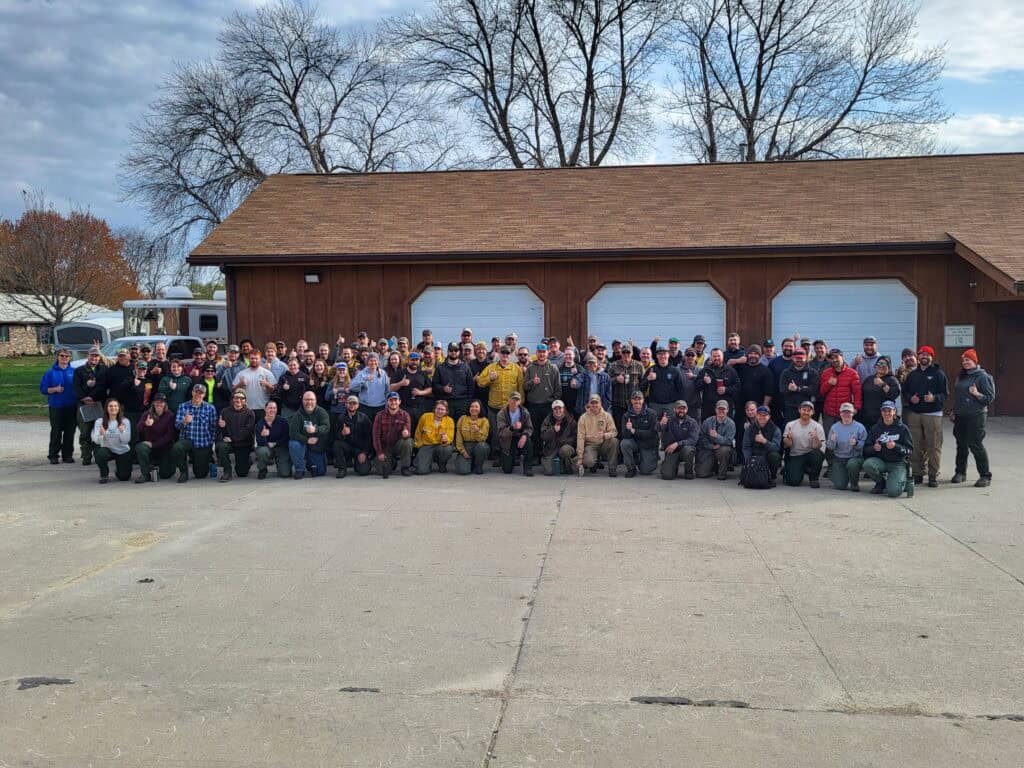
This led to the development of the Loess Hils Cooperative Burn Week, the first of which was held in 2016. The CBW focuses on local partners and providing personal skill building, widespread networking, and fireline experience for participants of all levels and qualification systems. In it’s 11 years, the Loess Hills CBW has welcomed over 925 participants and completed over 150 burn units covering 25,000 acres. The event has also seen over 150 participants work on Position Taskbooks.
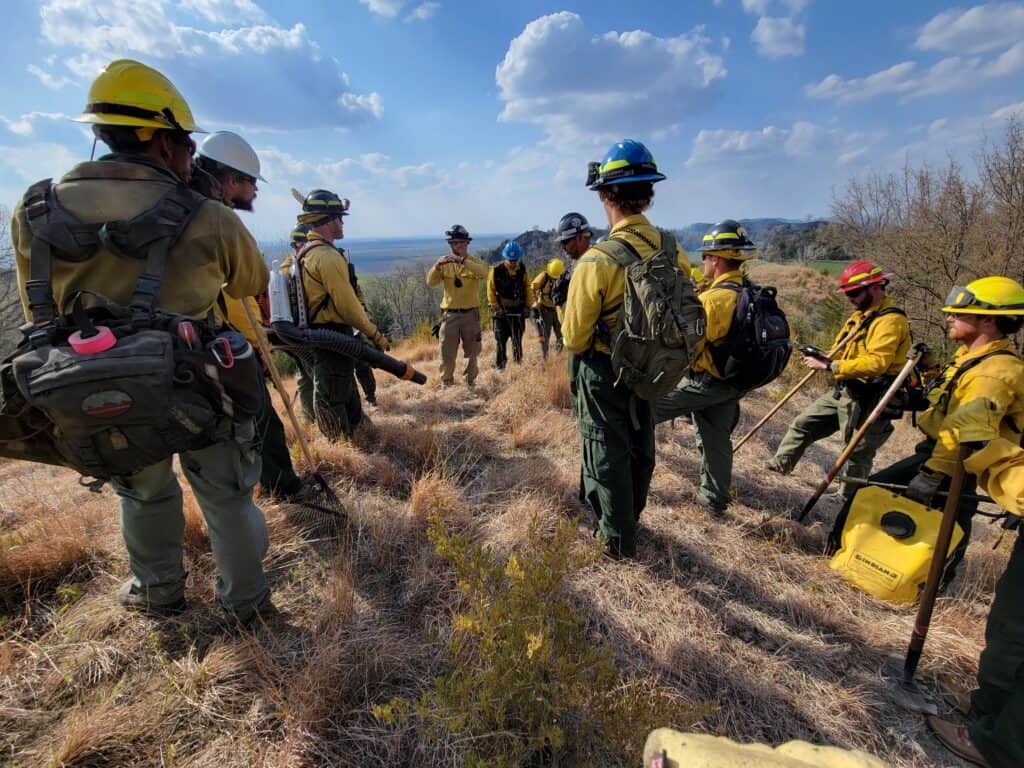
The full summary report for the 2026 Cooperative Burn Week provides complete coverage of the event accomplishments. Highlights from the 11th CBW include:
- 160 participants from 61 conservation agencies and organizations, volunteers and fire departments
- 3,237 acres burned across 21 units, including a 886 acre burn that spanned across 20 landowners containing 11 residences
- 31 individuals with evaluations for NWCG or IFIRE task books, including FFT1/ICT5, FIRB, and ENG