By Tobi Oyedele
The Canadian Prairies Prescribed Fire Exchange is the newest region to join the Fire Learning Network. CPPFE leaders will attend their first FLN workshop this November. The FLN is thrilled to welcome our first international region and looks forward to fostering learning and building relationships across borders.
The Canadian Prairies may not be the first place that comes to mind when discussing prescribed fire, yet they are home to one of North America’s most threatened ecosystems. Ironically, the story is not one of too much fire, but of too little. As native grasslands disappear and ecological processes are disrupted, prescribed fire has emerged as a critical tool for restoring the resilience and diversity of these iconic landscapes.
Our prairie landscapes are vast, beautiful, and increasingly at risk. Today, less than 20% of Canada’s native grasslands remain intact. Centuries of agricultural expansion and urban development have transformed much of the region, leaving the remaining grassland fragments isolated and vulnerable. Without the historic disturbances of fire and grazing, these remnants are steadily changing. Woody species, particularly trembling aspen, continue to encroach into open prairie, while invasive plants such as leafy spurge aggressively outcompete native vegetation. As these pressures mount, the ecological character of the Prairie landscape and the biodiversity it supports hangs in a delicate balance.
In response to these challenges, the Canadian Prairies Prescribed Fire Exchange (CPPFE) was established in 2020 with generous support from the Weston Family Foundation through the Prairie Grassland Initiative. Created to strengthen prescribed fire capacity across the Canadian Prairies, CPPFE fosters collaboration, knowledge sharing, and hands-on training among practitioners, land managers, and partner organizations.
Unlike many regions in the United States that have established state-backed prescribed fire councils, Canadian practitioners operate in a highly decentralized system. We lack a centralized national fire administration, and our provinces operate under distinct, highly cautious regulatory structures with strict liability laws that often deter private land burning.
The CPPFE was built as a grassroots bridging organization to span these jurisdictional gaps. By bringing together academic institutions, conservation groups, cattle producers and municipal agencies, we are building collaborative, cross-border fire culture.
While we do not execute burning ourselves, we build the scaffold that allows others to do so safely. We host Prescribed Fire Training Exchanges (TREX) in the Canadian Prairies to foster interagency training. We coordinate a shared regional equipment cache so that the small-scale land managers and ranchers have access to essential tools. We have provided accessible training by partnering with the University of Saskatchewan to launch asynchronous online training; Introduction to Prescribed Fire, and collaborated with Lakeland College in Alberta to offer hands-on entry-level Fireline courses.
Our operational reality is defined by notoriously narrow burn windows. In the Canadian prairies, the transition between frozen, snow-packed winter and hot, volatile summer drought is incredibly rapid. Our spring, Autumn burn windows are compressed into fleeting weeks-often interrupted by sudden snowstorms or unpredictable, high-velocity prairie winds. Operating safely in these tight parameters requires highly coordinated, rapidly deployable crews who are trained to work seamlessly across agency lines.
Most importantly, we are learning that prescribed fire alone is not enough.
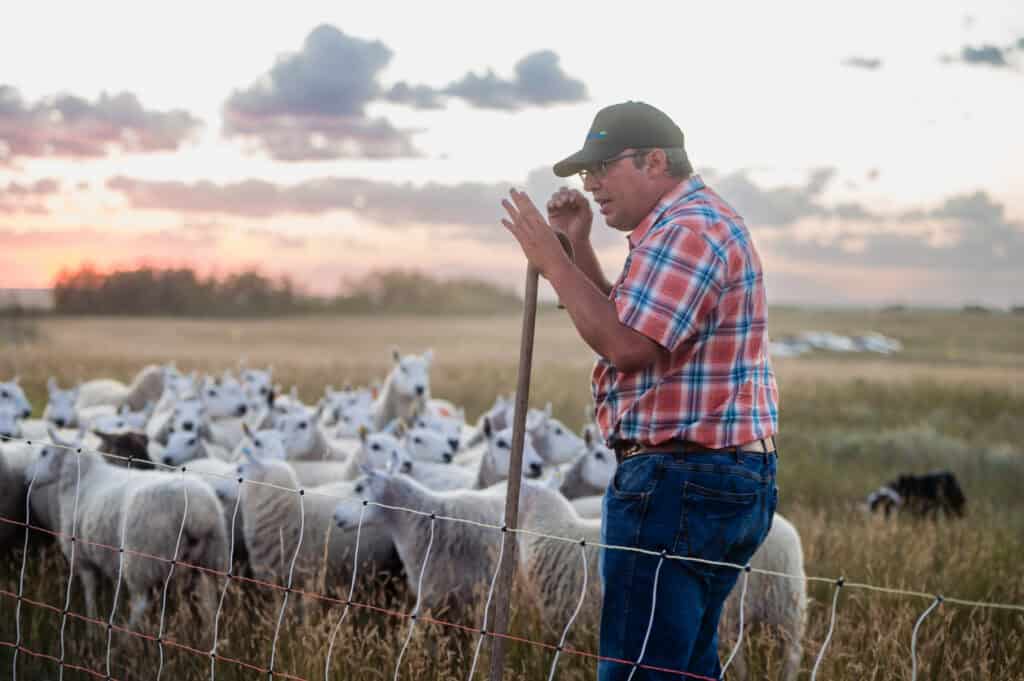
The historic interaction between fire and grazing, known as Pyric-Herbivory, is a cornerstone of grassland health and resilience. Together, these processes create the dynamic conditions that prairie ecosystems evolved with, supporting biodiversity, nutrient cycling, and long-term landscape sustainability.
The recent Meewasin Sheep Project in Saskatoon’s natural grasslands is an excellent example of this principle in practice. By utilizing targeted grazing as a complementary land management tool, the project highlights how innovative partnerships and integrated stewardship approaches can help restore ecological function and build more resilient prairie landscapes. In October 2025, the CPPFE under the management of the Meewasin Valley Authority completed a successful prescribed fire activity on a highly sensitive urban grassland that has not seen fire in over 20 years. To continue this work, in July 2026, Meewasin Valley Authority partnered with a professional shepherd to release 145 sheep onto the post burn unit. The sheep behaviour was intriguing as they targeted invasive broadleaves and grasses, while their hoof action broke up the soil crust and cycles nutrients back into the burned soil, restoring the natural, multi-specie processes our prairies depend on. This practice has created positive interactions and has piqued interest of the public (adults, teenagers, kids, professionals) to see and learn about fire and grazing as a natural and powerful grassland management tool.
We also work to support the revitalization of indigenous fire stewards and cultural burning, recognizing that the historical exclusion of indigenous fire-keepers has directly contributed to the decline of these systems.
Our greatest lesson and the foundation of our growth and expansion has been the power of collaboration.
Collaboration has been our most valuable catalyst for success. When regulatory and financial challenges appear daunting, partnerships create opportunities that would otherwise be out of reach. By sharing equipment, coordinating training efforts, and integrating prescribed fire with targeted grazing, we have demonstrated that even the most fragmented grasslands can be restored and stewarded effectively.
As we look to the future, we are excited to continue strengthening this cross-border exchange of knowledge with the Fire Learning Network (FLN) community. Together, we can advance innovative land stewardship practices, build resilient landscapes, and expand the role of “good fire” as a tool for healthy, thriving ecosystems for generations to come.
Visit Canadian Prescribed Fire to read more about their work: Fire Stories — Canadian Prairies Prescribed Fire Exchange Canadian Prairies Prescribed Fire Exchange: Advancing Prescribed Fire Knowledge, Training, and Conservation
Further Reading
Government of British Columbia. (2026, July 15). Cultural and prescribed fire resources. Ministry of Forests. https://www2.gov.bc.ca/gov/content/safety/wildfire-status/prevention/prescribed-burning/resources
Gross, D. V., & Lamb, E. L. (2021). Strategies to reintroduce prescribed fire as a grassland management tool in Saskatchewan. https://www.scilit.com/publications/68210a403637482afaad46dca5ea9c3f
Meewasin Valley Authority. (2026, July). Sheep return to Saskatoon Natural Grasslands as Meewasin restores natural prairie processes [Press Release]. https://meewasin.com/news-release-sheep-return-to-saskatoon-natural-grasslands-july-2026/
SaskToday. (2026, July 9). Sheepish work crew returns to Meewasin Valley: Targeted grazing employed to restore natural prairie processes. https://www.sasktoday.ca/saskatoon-today/saskatoon-news/sheepish-work-crew-returns-to-meewasin-valley-12526335
University of Saskatchewan. (2021, November 15). The art, science and conservation of prescribed fires. USask AgBio News. https://agbio.usask.ca/alumni-and-giving/agknowledge_issues/2021/articles/the-art,-science-and-conservation-of-prescribed-fires.php