Editor’s note: Since 2022, Fire Adapted Communities Learning Network and the Fire Networks have hosted annual learning opportunities about practitioner wellbeing and mental health, with special support from an anonymous funder. This blog recaps the most recent learning series, which took place in February and March 2026, for Fire Networks members to connect and learn more about practitioner wellbeing. We encourage readers to explore related reflections and resources in the blog archive, where topics such as burnout, peer support, and long-term recovery continue to surface as critical elements of fire adaptation work.
Fire practitioners carry a unique and often invisible load. Responders, organizers, community leaders, and other fire resilience workers serve as a steady presence during crisis, a bridge during recovery, and long-term stewards of fire adaptation. Sustaining this work requires not just training and technical expertise, but also care for the people behind the mission.
Our 2026 learning series on Practitioner Wellbeing and Mental Health, held in February and March, was designed with this reality in mind. The three-part virtual series offered practical tools, grounded science, and space for reflection, supporting both individual resilience and the health of the systems practitioners work within.
Session 1: Understanding Stress and Building Resilience
We began the series with guest speaker Christen Kishel, PhD, a Licensed Clinical Psychologist specializing in trauma, PTSD, and public safety psychology. Drawing from decades of experience supporting first responders and frontline professionals, Dr. Kishel guided participants through how the mind and body respond to both acute stress and long-term burnout.
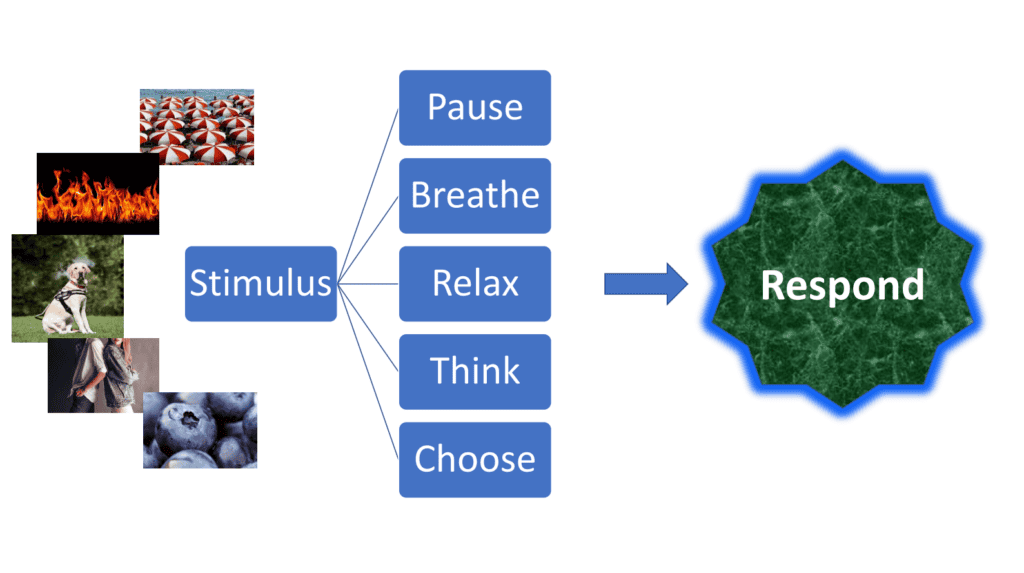
This session explored what happens internally during critical incidents, and why a pause between a stimulus and our reaction can make all of the difference in how we respond (see graphic below). Participants left with a deeper understanding of our bodies’ physical experience of trauma and stress, along with tools to interrupt moments of acute distress when they arise.
Dr. Kishel reminded us that even in the most demanding environments and stressful situations, reconnecting to our purpose can be a powerful anchor:
“When we start to get swallowed up by the busy-ness, the pressure to perform, to execute plans, to be ‘on’ at all times, we can remember to take one deep breath and remember why we do what we do. Who do we really work for? Sure, we work for an agency or an organization, but who we really work for is our family, our community, our lands and the amazing wildlife that lives on those lands. When I remember the meaning of my work, the impact I have the opportunity to make, my big ‘Why’, I can find my center and operate from there.”
Dr. Christen Kishel
Additional resources shared from Dr. Kishel:
- How to Train Your Monkey Mind (YouTube video; brief yet surprisingly effective meditation practice)
- Admiral McCraven “Make Your Bed” Motivational Words of Wisdom (YouTube video; inspiring words from University of Texas at Austin commencement speech)
- Six Movements to Prepare the Body for Rest (Instagram reel; simple and effective movements to relax the nervous system and help the body unwind)
Session 2: Supporting Recovery Without Burning Out
For Session 2 of this year’s series, we welcomed guest speaker Adrienne Heinz, PhD, a clinical research scientist at the National Center for Posttraumatic Stress Disorder at the US Department of Veterans Affairs and Stanford University. Her work sits at the intersection of trauma science, digital mental health, and disaster recovery.
Dr. Heinz’s workshop focused on the realities of long-term recovery work, where chronic stress, secondary trauma, and emotional fatigue are all common. Drawing on real-world disaster response experience, Dr. Heinz shared trauma-informed approaches for supporting communities while also maintaining personal and professional boundaries.
Dr. Heinz offered a unique perspective on wellbeing, focusing the need for intervention on an organizational, not just individual level:
“A cucumber can only hang in vinegar for so long before it inevitably becomes a pickle. The same is true for people working in wildfire recovery. Prolonged exposure to chronic stress, trauma, and resource strain takes a toll, no matter how skilled or resilient someone is in the face of adversity. We often place the burden of wellbeing on the individual helper: try yoga, get more sleep, meditate, watch your screen time. But burnout is just as much an organizational issue. The real question is how we can design systems that care for and sustain their people, rather than quietly extract from them.”
Dr. Adrienne Heinz
More info on Dr. Heinz’s work:
PTSD Coach (app designed to offer tools and support for managing trauma response symptoms)
The After Collective (AI-powered disaster recovery coaching resources)
Navigating the Messy Middle of Disaster Recovery (recent publication in Psychology Today)
Additional resources shared by Dr. Heinz:
Existential Risks Initiative from Stanford University
Building Emotional Resilience Guide from Climate Mental Health Network
Unthinkable Earth (quiz and resource hub for climate trauma and eco-anxiety)
Session 3: Leading and Sustaining Under Pressure
Our final session featured guest speaker Jolie Wills, a cognitive scientist and founder of the Hummingly Foundation, whose work focuses on resilience, leadership, and team effectiveness in high-pressure environments.
With experience leading teams through disaster recovery, including after the Christchurch earthquakes in New Zealand, Jolie brings both research and lived insight into what it takes to sustain recovery and community cohesion over time. Her session blended storytelling, cognitive science, and practical tools that participants could apply immediately within their teams and organizations to support wellbeing efforts.
Jolie’s work emphasizes a critical shift: moving emotional recovery and mental health support from an afterthought to a core component of disaster response systems. In her words:
From fire preparedness through to long-term recovery, this is complex, high-stakes, deeply human work—and we ask a lot of those who do it. Sustaining those involved in the effort requires a systemic approach across individuals, teams, and leadership, because self-care is vital, but it is not enough on its own. Wherever you sit in your organization, there are practical actions you can take to support yourself and those around you. We don’t have to lose good people to this work—the knowledge, evidence and tools are there to protect mission-driven people doing this work, but we must be intentional about applying them.”
Jolie Wills
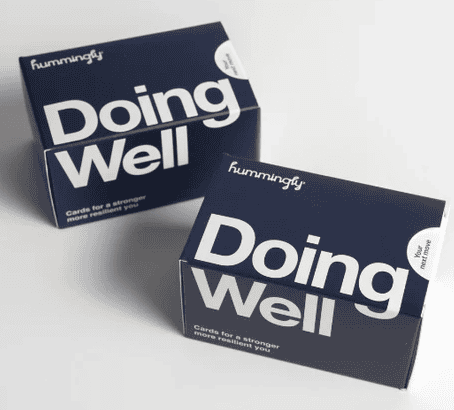
Jolie’s organization, Hummingly Foundation, has developed the “Doing Well” card deck, a resource for recovery practitioners. Built on insights from more than 100 crisis leaders worldwide, this 100-card deck is designed to strengthen practitioners’ ability to handle pressure, avoid burnout, and develop a quick 20-minute wellbeing routine. Each card introduces a practical approach for recognizing and managing stress and disruption.
Continuing Conversations and Learning Opportunities
As our guest speakers in this year’s learning series have underlined, practitioner wellbeing is foundational to community resilience. When people working in all aspects of fire are supported, resourced, and sustained, the entire system becomes more adaptive, responsive, and resilient.
This year’s learning series offered an opportunity to invest in that foundation—to pause, reflect, and build practices that allow practitioners not just to continue the work, but to do so in a way that is sustainable, grounded, and aligned with their wellbeing needs. We look forward to hosting future opportunities for practitioners to learn and connect over these topics.
****