Across California, communities, Tribes, fire agencies, land managers, nonprofits, and residents are doing the hard work of adapting to a future where wildfire is a part of life. From home hardening and evacuation planning to prescribed fire and landscape restoration, the solutions that make a difference are often grounded in local experience and partnerships.
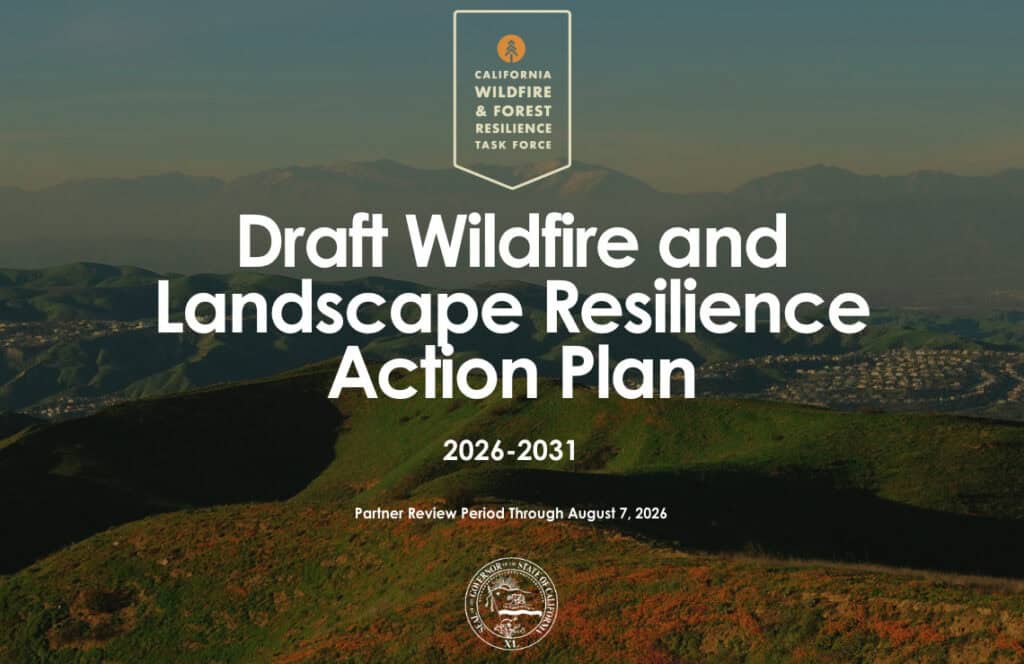
The California Wildfire and Forest Resilience Task Force has released its Draft Wildfire and Landscape Resilience Action Plan (2026–2031) for public review. This five-year plan will help guide investments, priorities, and collaboration across the state as California continues working to reduce wildfire risk and strengthen the resilience of both communities and landscapes.
Whether you are involved in a Fire Safe Council, Tribal organization, Fire Adapted Community effort, prescribed burn association, local government, conservation group, or simply care about the future of your community, your perspective can help strengthen the final plan. The Task Force is seeking public comment through August 7, 2026.
Why Review the Draft?
The draft plan is organized around three interconnected areas:
- Building resilient landscapes
- Strengthening community wildfire preparedness
- Mobilizing regional action and partnerships
These priorities touch many of the challenges communities are already working to address, including:
- Home hardening and defensible space
- Evacuation readiness and public education
- Prescribed and cultural fire
- Forest and watershed restoration
- Workforce development
- Cross-boundary collaboration
- Funding and implementation capacity
As practitioners know, the success of these efforts often comes down to details on the ground. Public comments can help identify gaps, highlight successful approaches, and ensure the final plan reflects the realities facing communities across California.
What Kind of Feedback Is Helpful?
You do not need to be a policy expert to participate.
Consider sharing:
- Strategies that have worked in your community
- Barriers that continue to slow implementation
- Opportunities for stronger local, Tribal, regional, and state coordination
- Gaps in funding, workforce capacity, or technical assistance
- Examples of community-led solutions that deserve greater support
- Ways the plan could better address the needs of your region
Thoughtful feedback from people doing the work every day can improve the plan and help align future investments with community needs.
A Chance to Strengthen Collective Action
California has made significant progress in wildfire resilience through unprecedented collaboration among agencies, Tribes, local governments, nonprofits, researchers, and community leaders. The next phase of that work will require continuing to learn from one another and building on what is already working. Consider reviewing and providing feedback to the Draft Action Plan by August 7, 2026.
****