Managed Wildfire: An Essential Tool for a Better Fire Future
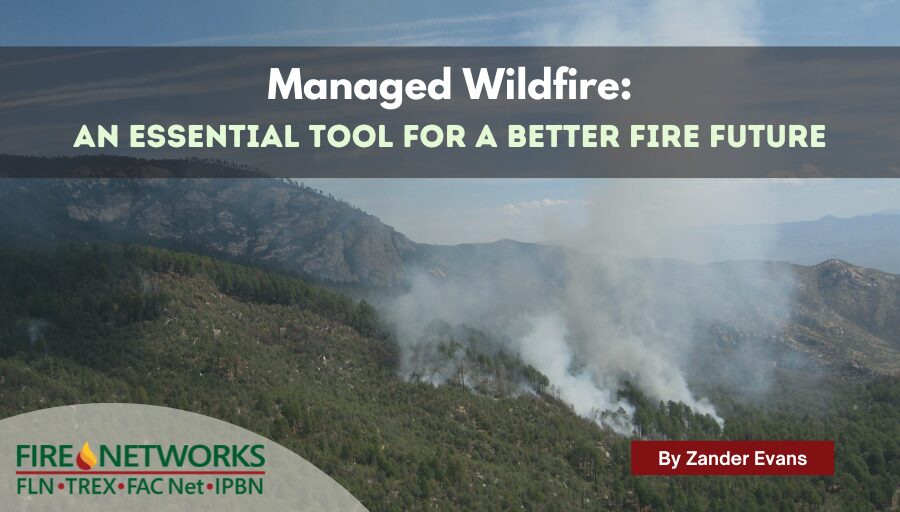
Editor’s note: Zander Evans is the Executive Director of the Forest Stewards Guild and holds a PhD from the Yale School of Forestry and Environmental Studies. Zander and the Guild have been longtime Fire Networks partners, particularly with involvement in the Fire Adapted Communities Learning Network and Fire Learning Network. This blog is the third…
My Five Favorite Photos from WTREX Nebraska
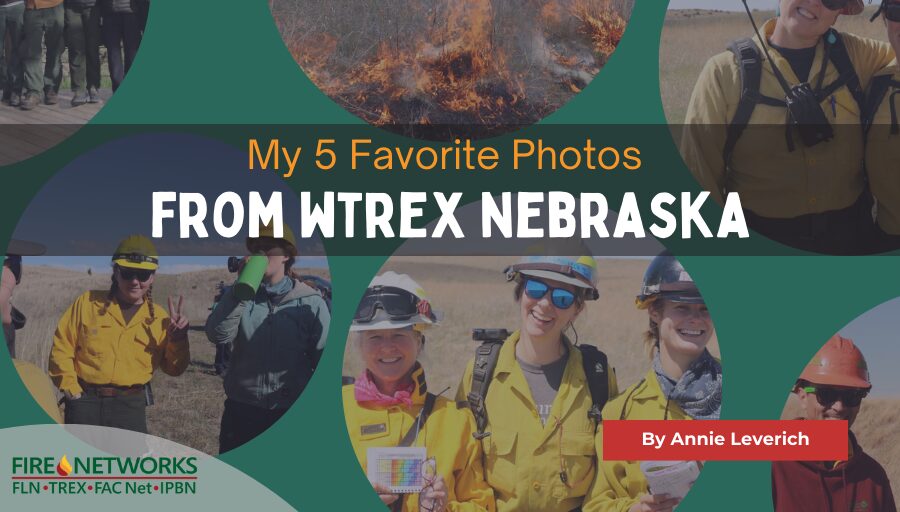
Editor’s note: Annie Leverich is the communications manager for FAC Net, and manages the Fire Networks blog and TREX/WTREX social media channels. In April 2024, Annie supported a Women-In-Fire Prescribed Fire Training Exchange (WTREX) in north-central Nebraska as the Public Information Officer, or PIO. In this blog, Annie shares some photos to recap the event….
Understanding Prescribed Fire Capacity in the Western United States
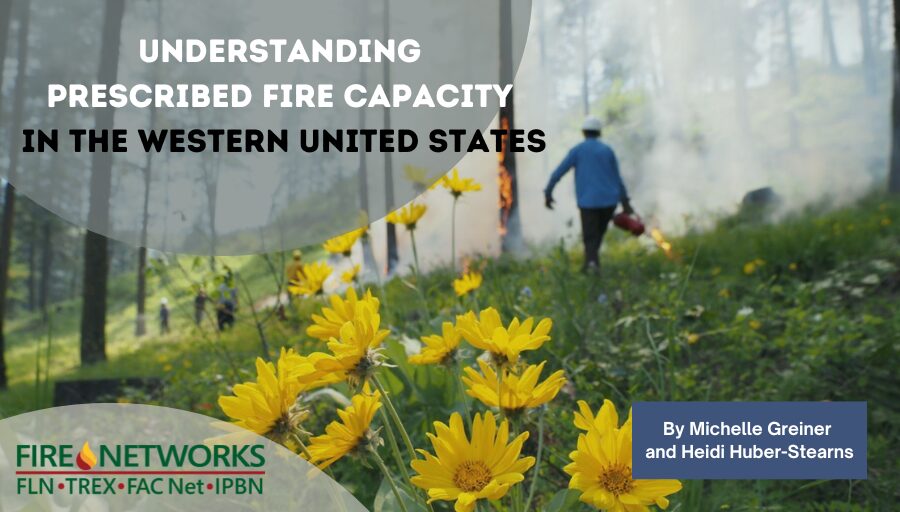
Editor’s note: This blog features a summary of a recent national survey research project jointly led by partners at Colorado State University, the University of Michigan, Rural Voices for Conservation Coalition, the Fire Learning Network, The Nature Conservancy, and the Watershed Research and Training Center. This research was focused on non-governmental entities outside of state…
Partners in the Movement for Good Fire: the Fire Learning Network and the Watershed Research and Training Center
Editor’s note: The Fire Learning Network (FLN) and the Watershed Research and Training Center (WRTC) have been partners for close to 20 years. FLN is one of the Fire Networks, and WRTC is the umbrella organization for FAC Net. WRTC recently developed an interactive StoryMap to highlight the FLN’s many influences on their fire management…
The Past Isn’t Static: Fire History on the Fourth of July
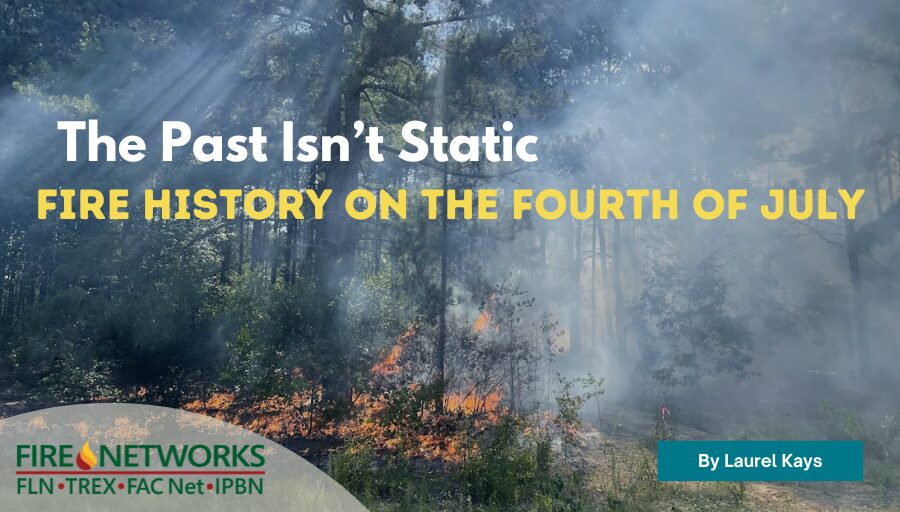
Editor’s note: Laurel Kays is the Manager of the Fire Learning Network. She lives and burns in North Carolina, including serving on the board of the North Carolina Prescribed Fire Council. In this blog, Laurel reflects on the writings, books, and people that helped shape her understanding of the history of fire in the U.S….
Youth Leadership in Fire Adaptation: the Wildfire Awareness Initiative
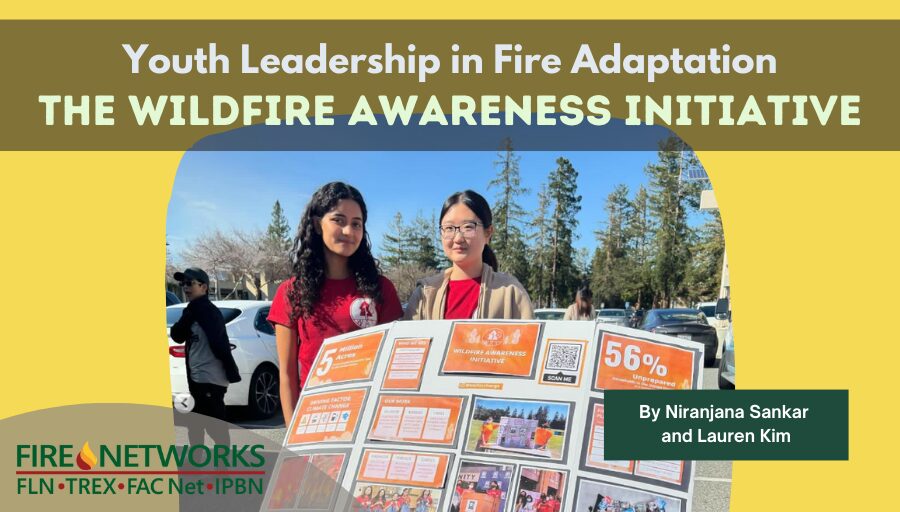
Editor’s note: We need everyone to be involved in community fire adaptation efforts. Young people are making incredible strides to innovate, educate, and increase awareness in the movement for living better with fire. In this blog, high school students Niranjana Sankar and Lauren Kim of the Bay Area in California share their work to organize…
Embracing Trauma-Informed Care in Fire Resiliency Efforts
Editor’s note: Amber J. Bosse, PhD is a facilitator and coach specializing in trauma-informed, community-centered methodologies. Through her consultancy, MapBosse Co., she offers workshops for local organizers, activists, and researchers working within communities that have lived experiences of trauma. Amber recently held a three-part workshop for the Fire Networks on trauma-informed care. In this blog,…
“Neighboring”: An Antidote to the Separation of Our Fire Adaptation Efforts
Editor’s note: David Burchfield is FAC Net’s Program Associate. Last September, David wrote a blog on the National Institute of Technology (NIST)’s Hazard Mitigation Methodology (HMM). In this follow-up piece, David reflects on how the social connections between neighbors may be the most important piece in ensuring the HMM’s practical applicability. The Hazard Mitigation Methodology…
June Roundup: Safety and Evacuation Resources for Your Community
Having safety and evacuation plans in place for your household and for your community are a critical step in being fire adapted. With summer quickly approaching, now is a great time to review these concepts and refresh awareness. Below is a curated list of safety and evacuation resources from our blog archive. Take a look,…
“Futuring” Fire: Selected Authors on What Comes Next
Every now and then, we take a look at the blog archives to understand the trends and patterns that might pop up over 10+ years of publishing practitioner stories each week. We noticed a fair amount of blog posts over the past two years or so that have something to do with imagining future scenarios…